

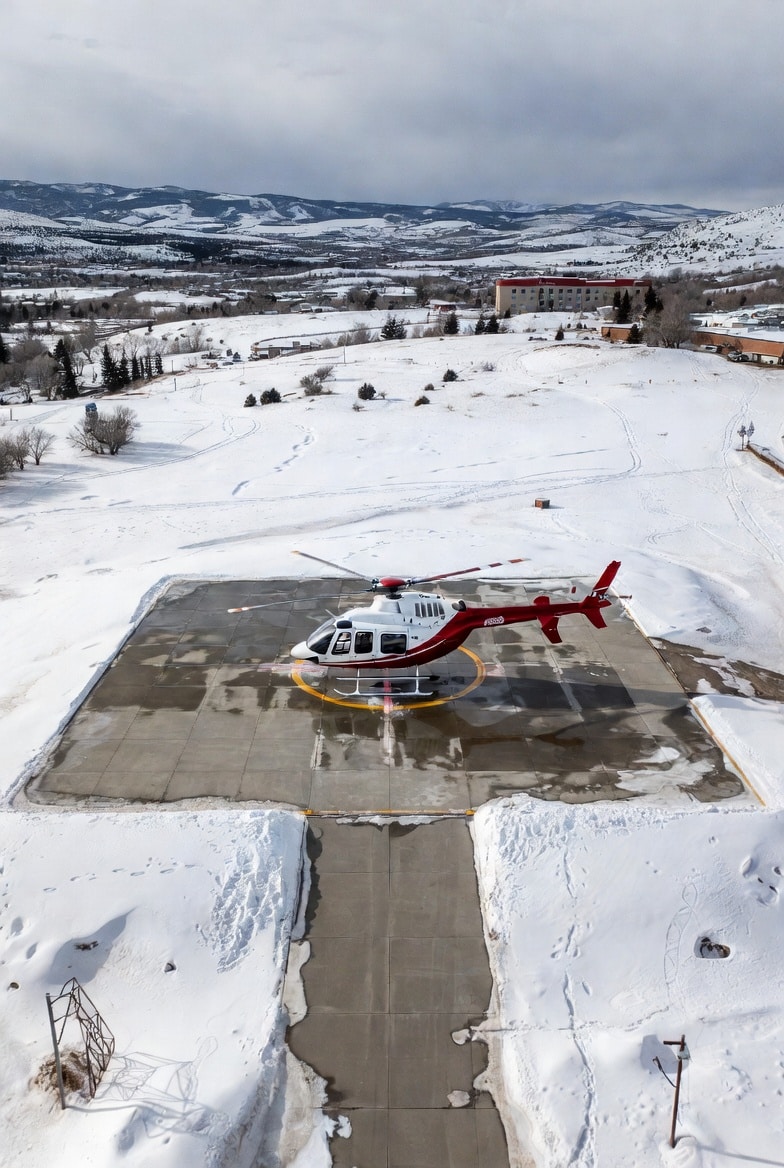
A Complete Guide to Engineering, Safety, Winter Performance, and Mission Critical Reliability
Helipads in Colorado Springs face the harshest combination of winter hazards: heavy snow, rapid freeze thaw cycles, rotor wash turbulence, and unpredictable storm shifts. These conditions make manual deicing unreliable and dangerous.
Aviation grade helipad snowmelt systems solve that problem. They deliver clear, dry, high traction landing surfaces through every storm, ensuring uninterrupted operations for hospitals, military aviation, fire departments, and air ambulance teams.
With nearly two decades designing commercial snowmelt systems across Colorado’s high elevation environments, Springs Concrete engineers hydronic and electric solutions built for mission critical aviation readiness.
For expanded commercial snowmelt applications, visit:
https://www.springsconcrete.com/heated-concrete-retail-hospitality-multifamily-aviation.html
––––––––––––––––––––––
Why Helipad Snowmelt Is Essential for Colorado Springs Aviation
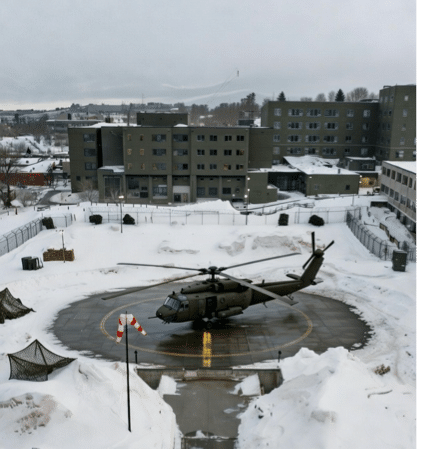
Ice on a helipad compromises more than landing accuracy. It creates rotor wash ice plumes that blind pilots, destabilizes aircraft during touchdown, and puts medical crews at risk. Elevation amplifies these dangers. Storms move quickly. Refreeze happens in minutes.
Heated helipads provide
• safe landings during active snowfall
• zero ice reformation during overnight freezes
• immediate availability for emergency medical flights
• safe footing for crews moving stretchers and equipment
• reduced ground crew labor and no chemical deicers
• predictable performance under FAA aligned readiness standards
For aviation facilities in Colorado Springs, snowmelt is not a luxury. It is an operational requirement.
––––––––––––––––––––––
How Snowmelt Systems Improve Flight Safety and Reliability
A heated pad eliminates the full spectrum of winter aviation hazards.
• Skid prevention during landing and takeoff
• No rotor wash ice clouds
• No surface spalling from chemical deicers
• Faster turnaround times between flights
• Safe ground movement for emergency personnel
• Storm proof reliability for air ambulance crews
Hospitals and military bases across the region report the same outcome:
Clear pad. No delays. Full operational continuity.
––––––––––––––––––––––
Hydronic vs Electric Helipad Snowmelt Systems
Electric Systems
Electric heating cables embedded in aviation grade concrete deliver fast response melt performance.
Electric is best for
• rooftop helipads
• small landing surfaces
• installations with limited mechanical room space
• retrofit pads needing minimal infrastructure changes
Strengths: rapid heat up, simpler installation.
Limitations: higher operating cost on large pads.
Hydronic Systems
Hydronic systems use a boiler driven glycol loop circulating through PEX tubing beneath the slab.
Hydronic is superior for
• large ground level helipads
• military and fire aviation centers
• high elevation operations with long storm cycles
• heavy rotorcraft load pads
Strengths
• lowest operating cost for large areas
• most even melt pattern
• optimal performance in continuous operation
• long service life and unmatched durability
Hydronic dominates aviation because it is engineered for scale, load, and efficiency.
––––––––––––––––––––––
Commercial Helipad Snowmelt Costs in Colorado Springs
Costs vary based on engineering requirements, melt rate, and site complexity.
Major cost factors
• pad size and thickness
• required melt rate and heat density
• mechanical room configuration
• insulation and vapor control layers
• elevation driven melt rate modeling
• FAA load considerations
• existing infrastructure constraints
Aviation pads require structural and thermal standards far beyond residential systems.
This is engineered work, not commodity construction.
––––––––––––––––––––––
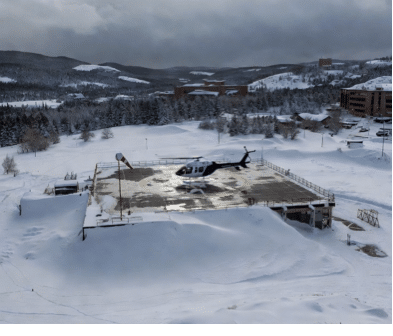
Real World Context: Mountain and High Elevation Helipads
Mountain helipads face extreme melt challenges
• deeper snow accumulation
• colder slab temperatures
• longer storm cycles
• intense overnight refreeze
Hydronic systems outperform all alternatives in these conditions, delivering consistent melt and absolute reliability.
––––––––––––––––––––––
Engineering Case Study: Hydronic Aviation Pad in Colorado
Project Overview
A regional emergency facility required a reliable heated helipad to eliminate ice buildup that caused unsafe landings and delayed medical evacuation.
System Engineering
• six inch 4500 psi aviation concrete
• two inch rigid insulation and full vapor barrier
• perimeter thermal breaks for energy retention
• PEX tubing spaced eight inches on center
• high efficiency boiler with dual zone manifold
• automated moisture and temperature sensing
• aircraft load rated slab reinforcement
Winter Performance
• zero ice events the entire season
• stable melt performance during high wind storms
• twenty six percent lower operating cost than predicted
• no chemical deicers used
• improved medical response time
This installation now serves as a reference model for future aviation snowmelt designs.
––––––––––––––––––––––
Ground Level Hospital Helipads: Operational Proof
Ground based hospital helipads must remain accessible twenty four hours a day. Snow accumulation around the pad is acceptable. Ice on the pad is not.
A properly engineered hydronic system guarantees a clear landing footprint even during active snowfall.
––––––––––––––––––––––
Maintenance and Longevity
Aviation snowmelt systems require seasonal checks to maintain peak performance.
Recommended maintenance
• boiler and pump inspection
• glycol concentration verification
• sensor calibration
• manifold pressure testing
• pre winter system activation testing
With proper care, hydronic aviation systems operate for decades.
––––––––––––––––––––––
Frequently Asked Questions
Do helipad snowmelt systems run constantly
No. Systems activate only when sensors detect moisture and freezing conditions. This reduces cost without compromising safety.
How long does a hydronic aviation system last
PEX tubing can last fifty years or more. Mechanical components last decades with scheduled service.
Can this system melt heavy snowfall at elevation
Yes. Hydronic is the preferred system for high elevation aviation facilities because of its sustained heat output.
Is hydronic better than electric for aviation applications
For large, ground level pads or heavy rotorcraft loads, hydronic is superior. Electric is appropriate for small rooftop pads.
Does heating impact aircraft equipment
No. Heated pads eliminate chemical deicers, which are far more corrosive. Hydronic systems create a clean, dry, safe landing zone.
Can an existing helipad be retrofitted
Yes. However, aviation loads typically require full slab reconstruction to integrate tubing and reinforcement correctly.
––––––––––––––––––––––
Conclusion
Aviation grade helipad snowmelt systems provide the reliability, melt performance, and operational safety that Colorado Springs aviation facilities require. Hydronic systems remain the highest performing option for large, high load, or high elevation pads. Springs Concrete engineers each system with mission critical precision, ensuring consistent flight operations through every winter storm.
For full commercial snowmelt services, including aviation, hospitality, retail, and municipal applications, visit
https://www.springsconcrete.com/heated-concrete-retail-hospitality-multifamily-aviation.html